by Susan Higgins
“A naïve little watercolour” is how this portrait was described when it hung on the walls of the museum picture gallery until recently. After looking other similar portraits it seems that ‘naïve’ is the adjective of choice when describing it, but what may have come across as a simplistic and child-like artistic style in the past now seems charming, honest and very real.
The word ‘naïve’ however, is not irrelevant when it comes to this image considering the age of many of the soldiers joining the Regiment at the time, their experience of the world, and of life in general. Joining the army would have meant the opportunity for travel and danger, and any young man could see his innocence affected by the harsh realities of war, disease, and 19th Century Colonialism.
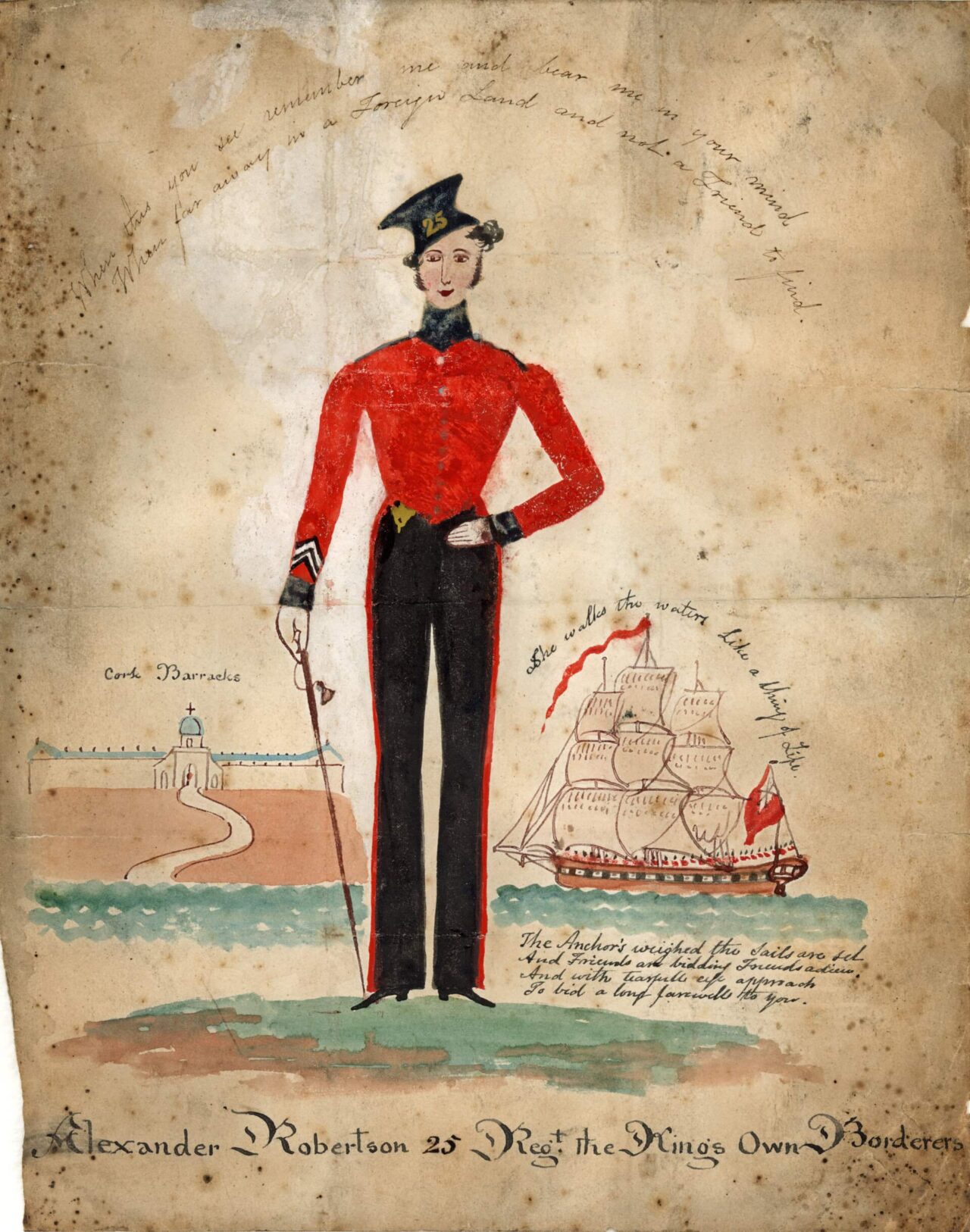
To give some context to the image, the King’s Own Borderers (as it was named at the time) was stationed at Cork in 1839 from where it embarked for Devonport in May. In August it received orders to prepare for service in South Africa and set sail on Christmas Day. It was common for a soldier going overseas to have a portrait painted of himself – either by a local artist or by an amateur in the regiment, and they tended not to sign them. Not many of these portraits survived and it is a rare depiction of uniform of the period. Sometimes these pieces of art are described as ‘sweetheart’ or ‘Valentine’ portraits, adding to the romantic notion of journeying by sea to unknown lands and adventure, or possibly to cholera and despair. Either way, the portrait acts as a memento of someone whose return is not guaranteed.
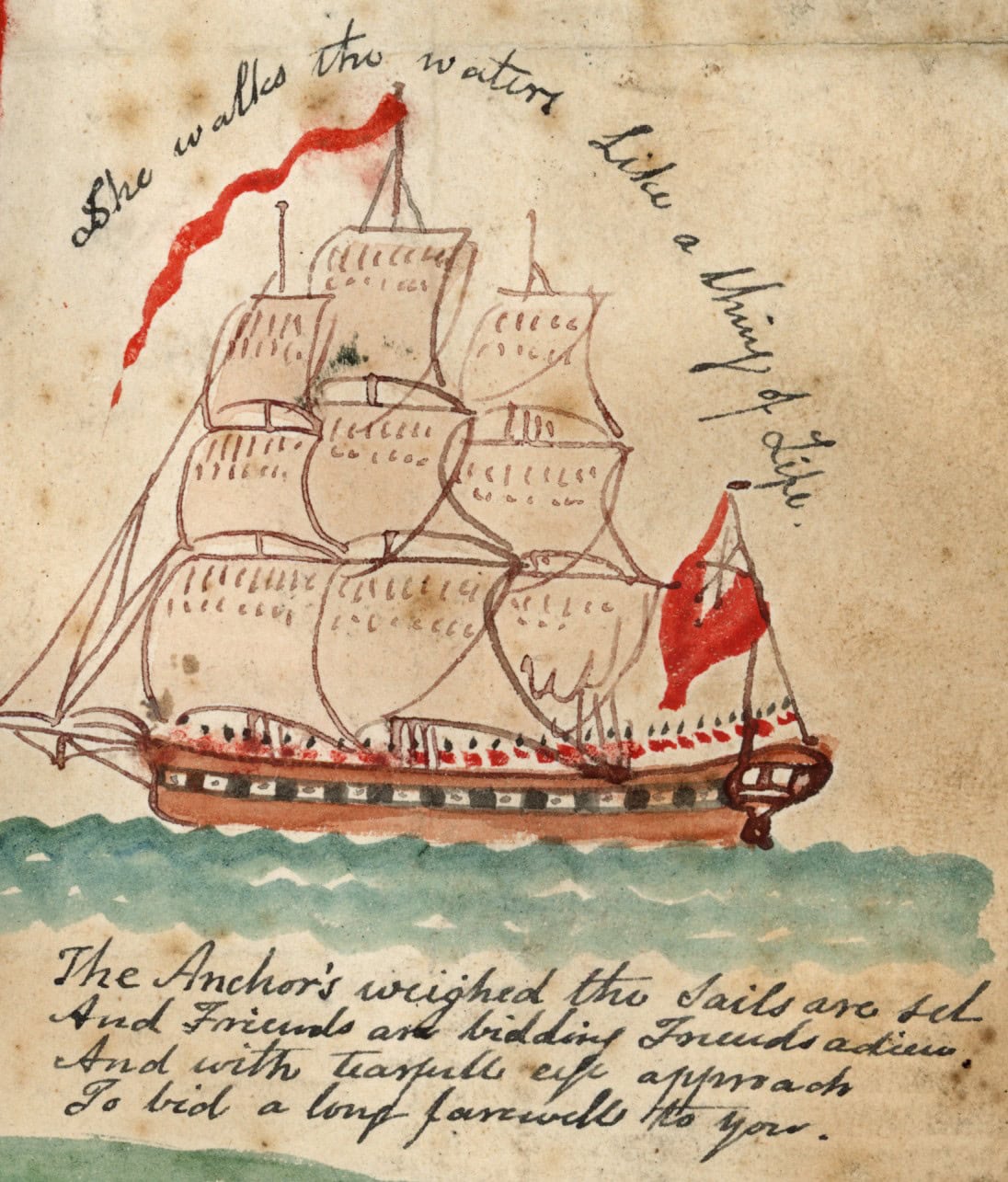
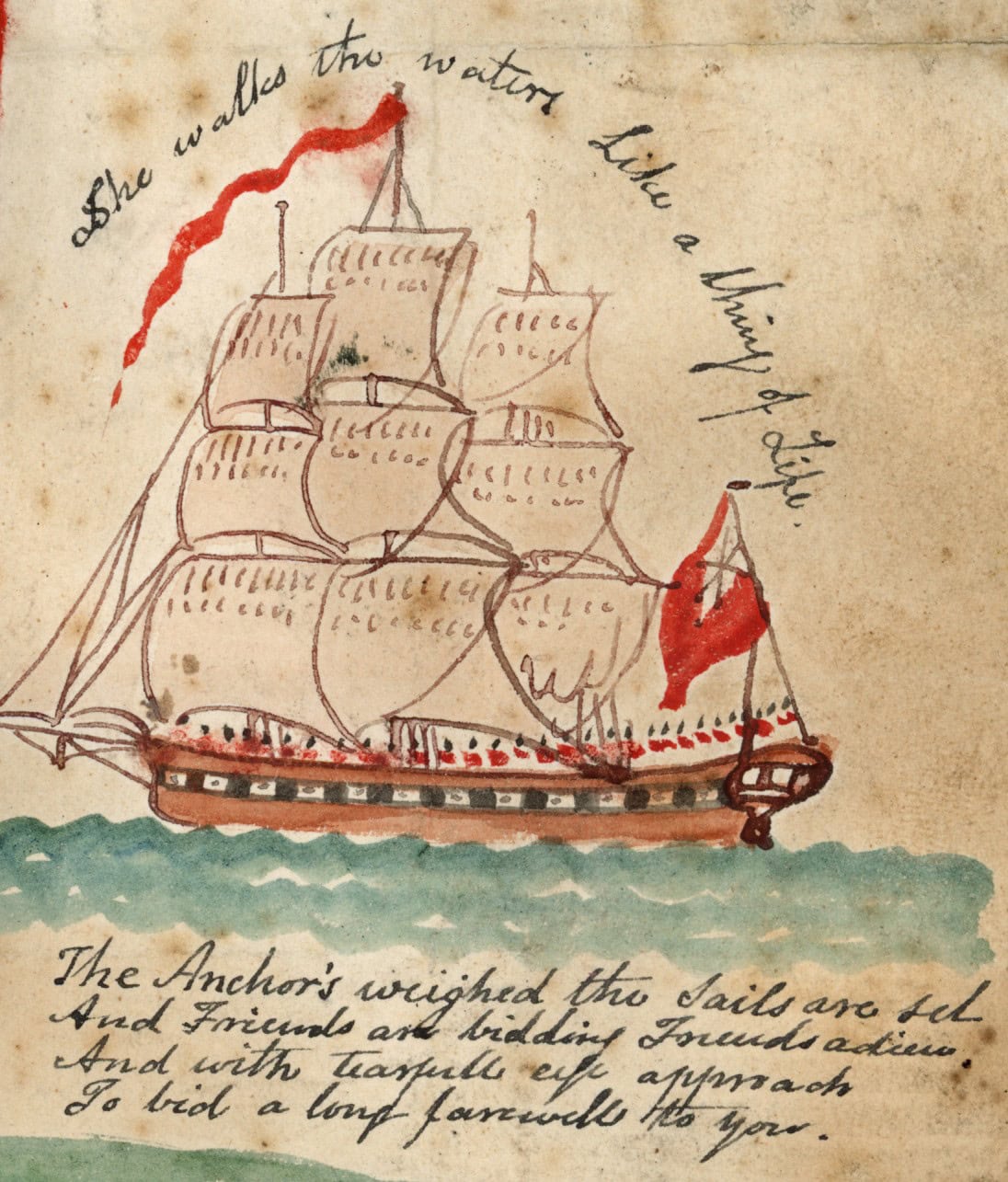
The little details behind the main image of Alexander Robertson give us some clues as to his situation. He is leaving Cork Barracks, boarding a ship packed with rows of tiny redcoats. The delightful arc of text around top of the ship reads “She walks the waters like a thing of life”, this striding, aquatic, personified female, with scarlet flags flying. A poem lurks beneath the waters:
The anchor’s weighed, the sails are set,
And friends are bidding friends adieu,
And with tearful eye approach
To bid a long farewell to you.
Above the head of Alexander Robertson floats the rainbow-like text: “When this you see remember me and bear me in your mind, when far away in a foreign land and not a friend to find.” Whether Alexander Robertson had a romantic or a familial connection with the intended recipient of the portrait, the sentiment is clear that, although he may yearn for the exploration of the unknown, he does not want to be forgotten and may hold some feelings of trepidation regarding imminent faraway travel.
The paper is thin and mould-eaten but the colours remain vibrant. There are crease marks, as though the paper has been folded to pocket size. On the reverse side of the paper are three lines of indecipherable text which (and I may be wrong) are not written in the same hand as the artist. Is it the handwriting of Alexander Robertson? Or perhaps the recipient of the portrait?
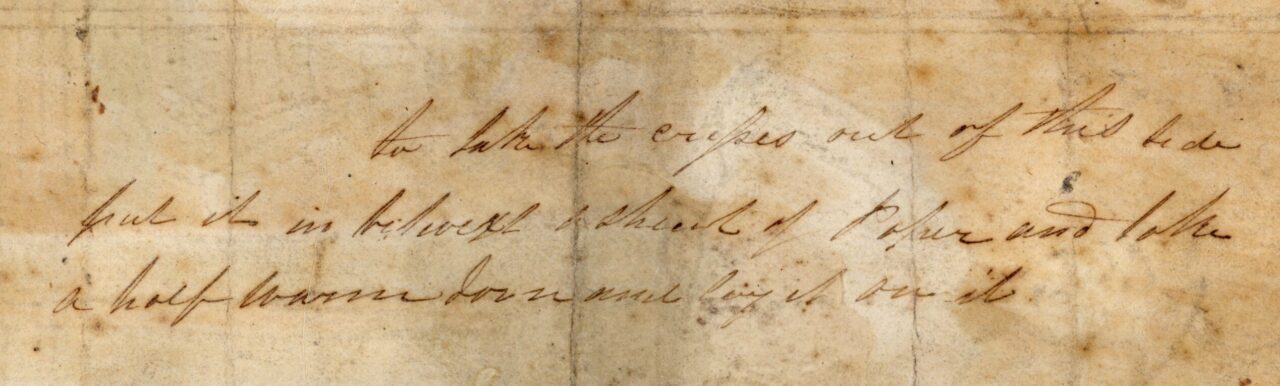
To ………….. the ……………… out of this tide
…………… it in ……………………. & …………. of/it
A half warm ……………. and lay it over/on it
The fact that this is a sweetheart portrait made me assume that this text would have a romantic edge. However, one of those words definitely looks like ‘crepes’ and another looks like ‘warm’. Is this a recipe? Although I also can’t help seeing the word ‘beloved’ somewhere in there. Or, as the paper has clearly been folded, is it advice on how to remove the crease?
To take the creases [?] out of this …
Put it in between a sheet of paper and take a
Half warm down [?] and lay it on it
Like the life of Alexander Robertson and the identity of the person he gave the painting to, it will likely remain a mystery.
Leave a Reply